
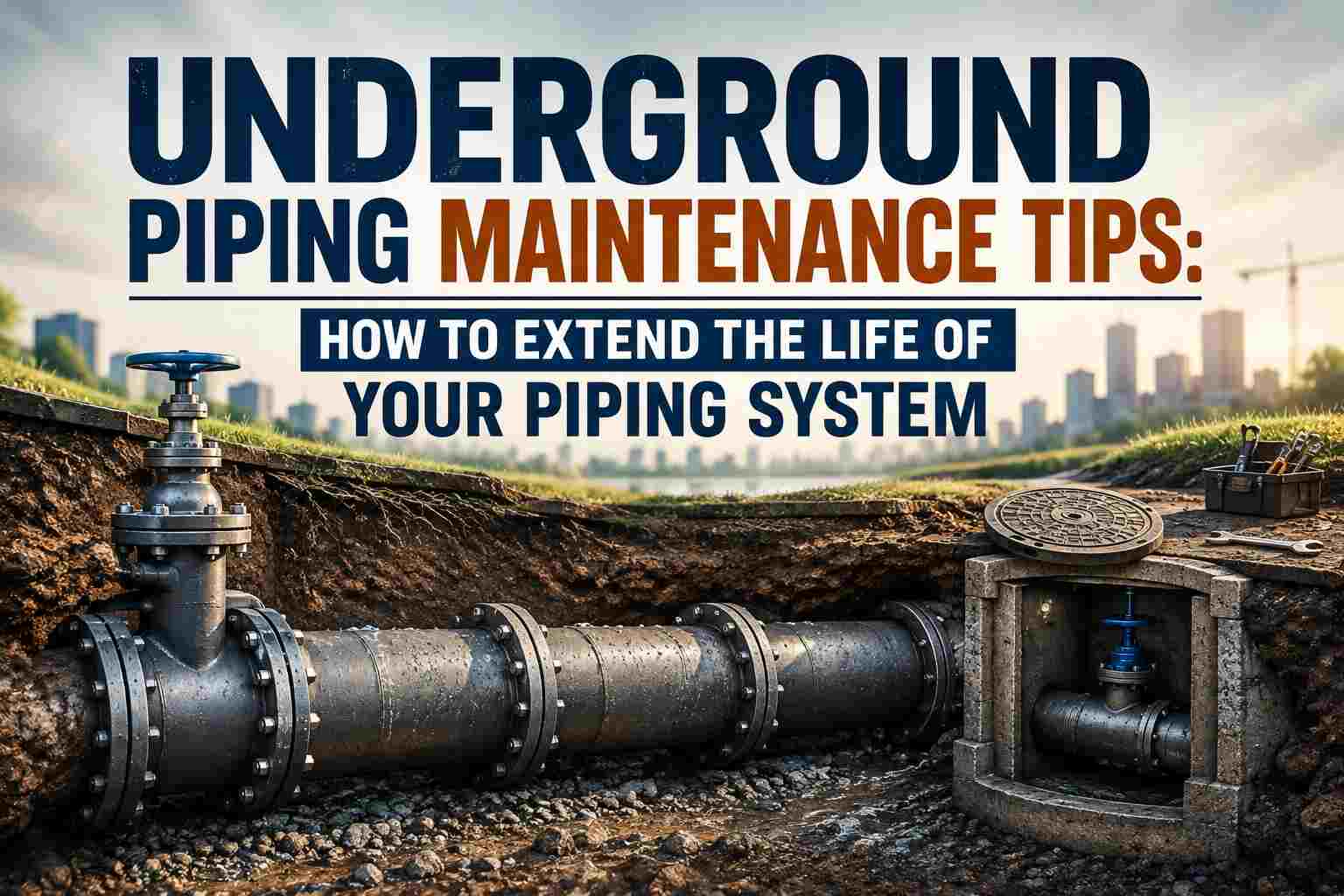
Underground Piping Maintenance Tips: How to Extend the Life of Your Piping System
After installation of the pipe, all is done well, it is easy to overlook the pipe until a problem arises. The challenge is that any damage, corrosion, shifting of ground, or change in pressure might happen unnoticed.
Good underground piping maintenance tips are mostly about paying attention before there is a serious problem. A sensible routine and a habit of acting when something looks different can prevent many problems.
Look at the Visible Components First
Every inch of the pipe cannot be inspected, but much information can be gathered about it from the surrounding areas. Examine all the valves, fittings, joints, chambers, and inspection points. Also, inspect the surroundings of the pipeline.
Is there excess moisture in the ground? Is the soil sinking in some places? Is water pooling where there is usually none? Such observations should not be ignored.
In case of a new drainage system installation, the supplier and the product itself become relevant at an early stage. In case you are searching for a DWC pipe supplier in Delhi, consider examining not only price but other factors as well.
Pay Attention When Pressure or Flow Changes
Your piping system usually has a normal rhythm. You know roughly how much pressure and flow to expect when everything is working properly. When those numbers change, find out why.
A pressure drop could be caused by a leak. Reduced flow might point to a blockage or damaged section. Sometimes the cause is much simpler, such as a problem with a valve or connection.
Keeping basic records of normal readings makes this easier. This is one of the most useful underground piping maintenance tips because you can often spot a developing problem without excavating the pipeline.
Don’t Give Corrosion a Chance to Spread
Corrosion can develop quietly. Moisture, groundwater, chemicals, and certain soil conditions can gradually affect pipe materials.
Protection may involve coatings, linings, drainage, or cathodic protection, depending on the pipe and its surroundings.
Soil conditions matter too. Moisture, salts, and pH can affect how different materials behave underground. Knowing what the pipe will be exposed to can help you choose a more suitable solution in the first place.
Check Joints, Valves and Fittings
Joints and fittings deal with pressure, movement, and normal wear. Poor installation can make them more vulnerable.
During routine checks, look for leakage, movement, damage, or anything that wasn’t there during the previous inspection. If a connection needs attention, deal with it while the repair is still straightforward.
This is another practical part of underground piping maintenance tips. A small joint repair is a very different job from finding and repairing a failed section several metres underground.
Choose the Pipe for the Conditions
The best pipe isn’t simply the one with the lowest purchase price. It needs to suit the job.
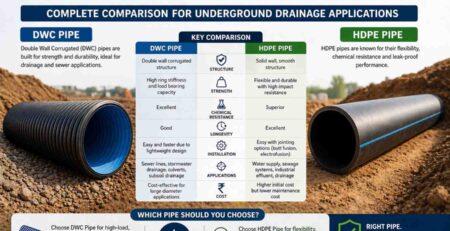
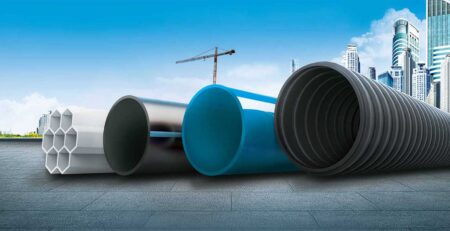
HDPE, PVC, PPR, ductile iron, and steel have different properties. Consider pressure, temperature, soil, chemical exposure, and what the pipe will carry.
If PPR is suitable for your application, a PPR Pipe Distributor in Delhi can help you source the required products.
Learn the Early Warning Signs
You may not see an underground leak, but you can often see its effects.
Keep an eye out for:
- unexplained pressure loss
- reduced or uneven flow
- wet patches
- unexpected water loss
- soil settlement
- repeated problems in the same area
- damaged valves or fittings
These signs don’t automatically mean the pipe has failed, but they are reasons to investigate. That is where underground piping maintenance tips become useful.
Early underground pipe leak detection can prevent a small issue from becoming an excavation project.
Don’t Keep Repairing the Same Problem
If the same section keeps failing, it’s worth asking why.
An old pipe with heavy corrosion and repeated leaks may be reaching the end of its useful life. On the other hand, a damaged fitting on an otherwise healthy system may only need a straightforward repair.
Look at the pipe’s age, condition, repair history, and expected use before deciding between underground pipe repair and replacement.
Keep a Simple Maintenance Record
You don’t need complicated software for this. A spreadsheet or maintenance log is enough.
Record inspection dates, pressure readings, leaks, repairs, replacements, and recurring problems. Over time, those notes can tell you something that a single inspection cannot.
Keeping a record is one of the less glamorous underground piping maintenance tips, but it can make future maintenance decisions much easier.
A Simple Maintenance Routine
A useful routine can be simple. These underground piping maintenance tips fit easily into regular site checks:
- Check pressure and flow.
- Look for unusual moisture or water loss.
- Inspect accessible joints, valves, and fittings.
- Check corrosion protection where applicable.
- Investigate changes instead of ignoring them.
- Keep records of repairs and inspections.
- Give older sections extra attention.
- Fix small problems before they become larger ones.
Consistency matters, and these underground piping maintenance tips don’t require a complicated maintenance program.
When Should You Replace Underground Piping?
Sometimes repair may not be the most practical decision in the long run. The reasons why could be extensive corrosion, frequent leakage, damage to the pipes or the fact that the pipe has reached the end of its effective lifespan.
DWC pipes are one of the best options in the market. You should find a reliable DWC pipe supplier in Delhi to help you get what you need.
Consider the expense of constant repairs against the age and lifespan of the current pipe.
Conclusion
Underground pipe installation does not require any maintenance, but it is important not to forget about that at all. Conducting inspections will allow detecting various problems before they escalate into something serious.
Keeping up with underground piping maintenance tips is much easier than dealing with an avoidable failure.
For new installations or replacement work, Best Tech Pipe can help you find a suitable piping solution. Choose based on the project’s conditions.
Contact us to discuss your piping requirements, or visit our Google Business Profile to learn more about Best Tech Pipe and connect with our team. Best Tech Pipe can help with your project.
Frequently Asked Questions
What are the ways that the lifespan of underground piping systems can be attained?
The ways are Inspection, leak detection, protection against corrosion, and maintenance are among some.
What makes the underground piping system faulty?
Among some factors are corrosion, movement of the soil, pressure, faulty installation, age, and connections.
How will I know that my underground piping system has leaks?
Among some signs are loss of pressure and flow, wet soil, and water loss.
When do I need to replace the underground piping system?
Where there is considerable damage to the pipes due to corrosion.



Leave a Reply