

How To Calculate Pipe Diameter For Drainage (Complete Engineering Guide 2026)
Drainage might not be the most glamorous topic in the world, but it becomes very important the moment water decides to misbehave on your property.
Whether you are working on residential plumbing, commercial construction, or large infrastructure, knowing How To Calculate Pipe Diameter For Drainage helps prevent flooding, backflow, and expensive mistakes later.
Many engineers and contractors also rely on DWC pipe manufacturers in Delhi NCR when selecting durable drainage systems, especially for underground applications where strength and flow efficiency matter. These pipes are widely used in modern drainage planning due to their structural performance and long life.
Let’s break this down in a simple, practical way, without turning it into rocket science.
Why Pipe Diameter Calculation Actually Matters
If you get pipe size wrong, three things happen:
- Water flows slower than traffic in Delhi at 6 PM
- Pipes overflow during heavy rain
- Maintenance costs increase dramatically
Drainage systems depend on flow capacity. If the pipe is too small, it becomes a bottleneck. If it’s too large, you waste cost and reduce flow efficiency.
This is why engineers use structured methods like drainage pipe sizing formula and hydraulic flow calculations instead of guessing.
Key Factors That Affect Pipe Diameter
Before jumping into formulas, you need to understand what controls pipe sizing.
- Flow Rate (Discharge)
This is the amount of water that needs to pass through the pipe.
- Slope (Gradient)
A steeper slope increases water speed.
- Pipe Material
Smooth pipes carry water faster than rough ones.
- Rainfall Intensity
In stormwater systems, rainfall plays a huge role in stormwater pipe size calculation.
- Usage Type
- Stormwater drainage
- Sewer systems
- Industrial waste lines
Each has different design requirements.
Basic Formula for Pipe Sizing
Engineers commonly use the Manning Equation for open channel and drainage pipe flow:
Q=1nAR2/3S1/2Q = \frac{1}{n} A R^{2/3} S^{1/2}Q=n1AR2/3S1/2
Where:
- Q = flow rate
- n = roughness coefficient
- A = cross-sectional area
- R = hydraulic radius
- S = slope
Now don’t panic. You don’t need to solve this like a math exam. Most engineers use standard tables derived from this formula.
This is the foundation of most sewer pipe diameter calculation methods used in civil engineering.
Stormwater Pipe Size Calculation (Simple Explanation)
Stormwater systems handle rainwater, not wastewater.
To calculate pipe size:
- Estimate rainfall intensity (based on local climate data)
- Calculate runoff area
- Apply discharge formula
- Select pipe diameter from standard charts
In India, urban drainage design often follows guidelines used in municipal engineering standards and hydrology manuals.
For example, heavily paved areas require larger diameters due to faster runoff.
And yes, this is where many projects go wrong when they “estimate” instead of calculate.
Sewer Pipe Diameter Calculation (Wastewater Systems)
Sewer systems work differently from stormwater systems because flow is more constant but slower.
Key points:
- Minimum velocity must prevent sediment buildup
- Pipes must self-clean under normal flow
- Gravity flow is preferred
Engineers calculate expected population load or usage and convert it into flow rate, then determine pipe diameter using hydraulic principles.
This is where proper planning avoids blockages that smell like bad decisions later.
Underground Drainage Pipe Sizing in India
In India, drainage design must consider:
- High rainfall variation
- Urban flooding risks
- Soil conditions
- Load from roads and structures
This is why underground drainage pipe sizing India requires careful planning, especially in metro cities.
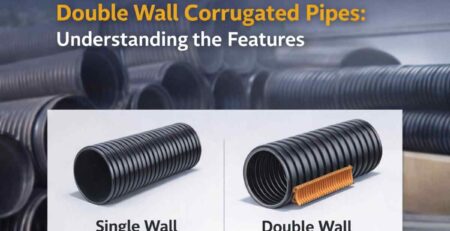
Many modern projects use Underground Double Wall Corrugated Pipes in Delhi because they offer:
- High structural strength
- Better flow efficiency
- Resistance to soil pressure
- Long service life
These pipes are commonly supplied by DWC pipe manufacturers in Delhi NCR, who support infrastructure, housing, and industrial drainage systems.
Choosing the Right Pipe Type Matters More Than You Think
Pipe sizing is not just math. Material selection plays a huge role.
For example:
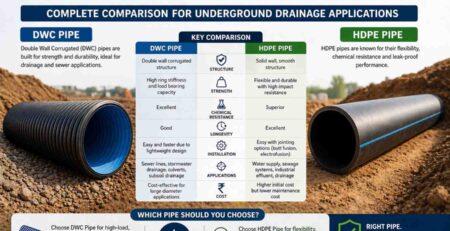
- PVC pipes = smooth flow, light duty
- RCC pipes = heavy load, infrastructure use
- DWC pipes = modern underground drainage solution
If you are working on large-scale projects, Underground Double Wall Corrugated Pipes in Delhi are often preferred due to their balance of strength and flexibility.
Also, reputable suppliers like Best Tech Pipe LLP (visible through their Google Business profile) provide technical guidance that helps engineers match pipe type with correct diameter selection.
Common Mistakes in Pipe Diameter Calculation
Let’s save you from expensive errors:
Ignoring slope: Even a correct diameter fails if slope is wrong.
Guessing instead of calculating: “Eyeballing” pipe size is not engineering, it’s gambling.
Not considering peak flow: Drainage systems fail during peak load, not average flow.
Using wrong material assumptions: Roughness changes flow capacity significantly.
Step-by-Step Simple Method (Practical Approach)
Here is a simplified workflow engineers follow:
Step 1: Calculate flow rate: Estimate water volume using area and rainfall or usage data.
Step 2: Choose slope: Based on site design or gravity flow system.
Step 3: Select pipe material: This affects friction and velocity.
Step 4: Apply Manning’s equation or standard charts
Step 5: Select nearest standard pipe diameter: This is how professionals approach How To Calculate Pipe Diameter For Drainage without overcomplicating it.
A Simple Real-Life Analogy
Think of pipe diameter like a highway:
- Small pipe = narrow road → traffic jam (overflow)
- Big pipe = oversized highway → underutilized cost
- Correct pipe = smooth traffic flow (ideal drainage)
Water, like people, hates waiting in queues.
Why Correct Calculation Improves Long-Term Performance
Correct sizing ensures:
- No flooding during heavy rains
- Longer pipe lifespan
- Reduced maintenance cost
- Better hydraulic efficiency
This is especially important in urban infrastructure projects using Underground Double Wall Corrugated Pipes in Delhi, where long-term durability is critical.
Final Insights on How To Calculate Pipe Diameter For Drainage
Understanding How To Calculate Pipe Diameter For Drainage is not just for engineers—it helps contractors, planners, and developers avoid costly mistakes.
Instead of guessing, always rely on:
- Hydraulic formulas like Manning’s equation
- Proper rainfall data
- Correct material selection
- Trusted suppliers like DWC pipe manufacturers in Delhi NCR
Good drainage design is invisible when it works, but very obvious when it fails.
And trust me, nobody wants their project to become a “mini swimming pool experiment.”
If you’re planning a drainage project and want expert guidance on pipe sizing, material selection, or reliable supply of DWC pipes, contact us today. Our team at Best Tech Pipe LLP is here to help you choose the right drainage solutions with precision and confidence.





Leave a Reply