
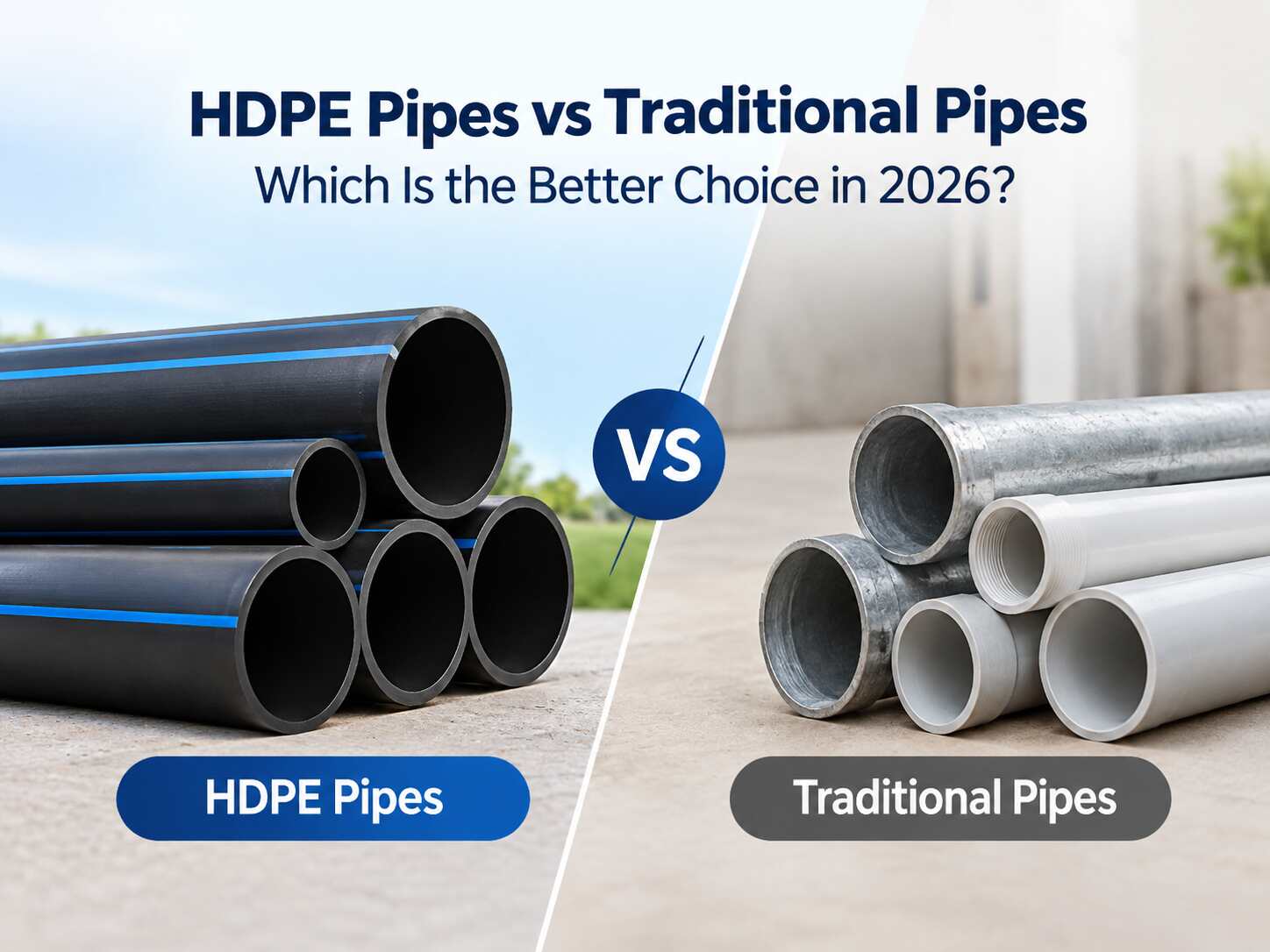
HDPE Pipes vs Traditional Pipes: Which Is the Better Choice in 2026?
HDPE Pipes vs Traditional Pipes: Which Is the Better Choice in 2026?
It is possible to say that a wrong choice of piping system may lead to increased expenses, lower quality of infrastructure projects, and increased maintenance costs. People who intend to buy pipelines for the projects that will be launched in 2026 pay increased attention to choosing between HDPE pipes vs traditional pipes for various purposes, including the supply of water, drainage systems, irrigation, industries, and other infrastructure projects. The main reasons why HDPE pipes became popular are high flexibility, durability, resistance to corrosion, lack of leakage at connections, and comparatively long life.
Best Tech Pipe is the leading PPR pipe distributor in Delhi. It is a good idea to know about all the differences between HDPE and traditional pipes if you want to make the right choice of pipes for your project.
Understanding HDPE Pipes and Traditional Pipes
The choice can be made by considering data about materials used in the manufacturing of these two pipes. The HDPE pipe full form stands for High-Density Polyethylene Pipe. HDPE pipe can be described as “the pipe made from high-density polyethylene,” and this is a thermoplastic material.
Traditional pipes can be of the type such as PVC, concrete, cast iron, ductile iron, and many more. Different materials have their own benefits, and the selection of the best material depends upon the operating conditions and service life of the pipes.
Need help in choosing pipe types and specifications for your new pipeline project? Get in touch with Best Tech Pipe today.
HDPE Pipes vs Traditional Pipes: Key Differences
An effective comparison requires that other factors apart from the cost of purchase be considered as well. Factors such as durability, ease of installation, maintenance, adaptability, and performance could make a difference.
1. Durability and Service Life
HDPE pipes in the modern world have been engineered to withstand tough underground and outside conditions. Since HDPE pipes are non-corrosive, they are not susceptible to corrosion as compared to most metal pipes.
While metal pipes would need protection from corrosion, concrete, which is a rigid material, could crack depending on environmental conditions.
In situations where reliability is a factor, HDPE pipes could prove to be a useful alternative.
2. Flexibility During Installation
Flexibility is one of the major advantages of HDPE piping. The material can bend as well as allow for movement in the ground without the pipeline being totally rigid.
Traditional rigid pipes have the disadvantage that they may need more joints and fittings and will thus be more difficult to install.
3. Leak-Resistant Joints
HDPE pipelines can commonly be joined through heat-fusion techniques. Fusion results in a sealed joint that does not leave gaps where any leaking could take place.
Piping systems in the traditional form can utilize mechanical joints or seals. Such joints may require regular maintenance.
4. Lightweight Construction
High-density polyethylene (HDPE) pipes tend to be relatively light weight compared to various other concrete and metallic options.
For larger projects, easier handling can help reduce labor requirements and simplify site operations.
5. Resistance to Moisture and Chemicals
HDPE is highly resistant to moisture as well as many chemicals. The qualities make it ideal for use in water transport, drainage, sewage, irrigation, and various industrial applications.
However, the applicability of a pipe in any situation must always be confirmed in relation to the fluid, temperature, and pressure involved.
Need HDPE pipes for your project? Speak with Best Tech Pipe for product specifications and purchasing guidance tailored to your application.
Also Read: Underground Piping Maintenance Tips: How to Extend the Life of Your Piping System
What Are HDPE Pipes Used For?
A common question among buyers is HDPE pipe used for which applications. The answer includes a wide range of residential, commercial, agricultural, and industrial requirements.
Common HDPE pipe uses include:
- Underground water pipelines
- Sewerage and wastewater networks
- Drainage systems
- Industrial fluid transportation
- Rainwater management
- Utility and cable protection
- Mining and specialized infrastructure
The diverse applications of HDPE pipes represent another reason why the use of the material is significant in present-day construction works.
It is necessary to pick the right diameter, pressure, material grade, and way of assembly depending on the purposes of using the pipe.
Classic pipes may be viable options in certain cases. All depends on the existing infrastructure, technical requirements, etc.
Cost and Maintenance Considerations
However, when evaluating HDPE pipes vs traditional pipes, cost at purchase must not be the sole criterion for selection. An inexpensive piping system may eventually turn out to be costlier if it needs constant repair, replacement, and installation work.
HDPE can reduce some future costs due to its light weight, ability to resist corrosion, low maintenance requirement, and possibility to join using fusion technology.
Conventional pipes could also prove to be economically and practically feasible in certain situations. The infrastructure that is currently in place, along with other design and structural factors, could influence the decision. It is wiser to make an estimate of the total cost of ownership involving material, transportation, installation, maintenance, repairs, and longevity of the system.
For drainage and underground utility applications, it is possible to compare specialized systems offered by a DWC pipe supplier in Delhi.
When Should You Choose HDPE Pipes?
HDPE can be a strong choice when your project requires:
- Long-term underground performance
- Flexible installation
- Resistance to corrosion
- Reduced leakage risks
- Easy transportation and handling
- Water or irrigation applications
- Drainage and wastewater solutions
- Performance in challenging ground conditions
The HDPE pipe full form explains the material behind the product, but understanding the application is equally important. The pipe should be selected according to operating pressure, fluid type, temperature, soil conditions, installation method, and relevant technical standards.
Looking to buy HDPE pipes vs traditional pipes for an upcoming project? Contact Best Tech Pipe today to discuss available sizes and suitable specifications.
When Can Traditional Pipes Still Make Sense?
Traditional piping systems have not become outdated. PVC, concrete, ductile iron, and other established materials continue to be useful for different infrastructure requirements.
Traditional pipes may make sense when:
- An existing pipeline already uses the same material
- Specific structural requirements favor rigid piping
- Project specifications require a particular material
- Local availability affects the purchasing decision
- The application has established installation practices
- Engineers recommend a conventional material for site conditions
Therefore, selecting a pipe should be based on technical suitability rather than simply choosing between modern and traditional materials.
Why HDPE Is Gaining Attention in 2026
This rise in emphasis on durable construction, efficient installation, water saving, drain management, and lifecycle costs has added to the demand for advanced piping systems.
In this regard, HDPE pipes vs traditional pipes is not just a comparison between traditional and modern pipes. It is rather an effort to identify a piping system that offers an appropriate blend of durability, flexibility, installation, maintenance, and value for money.
Knowing the HDPE pipe full form and the suitability of the material may assist buyers in making their decisions.
Final Verdict: Which Is Better?
So, what about this HDPE pipes vs traditional pipes competition for 2026—what wins this battle?
Where flexibility, corrosion resistance, light weight, joint sealability, and durability are top priorities, HDPE is definitely one of the most sensible solutions. For projects where traditional pipes are more appropriate due to various specifications and structural needs, HDPE won’t be the best choice.
The answer always depends on the application, pressure conditions, environment, liquid that is being transported, and duration of service.
Choose your pipes! Get in touch with Best Tech Pipe today for product guidance, technical specifications, and a quotation for your project.

Leave a Reply