
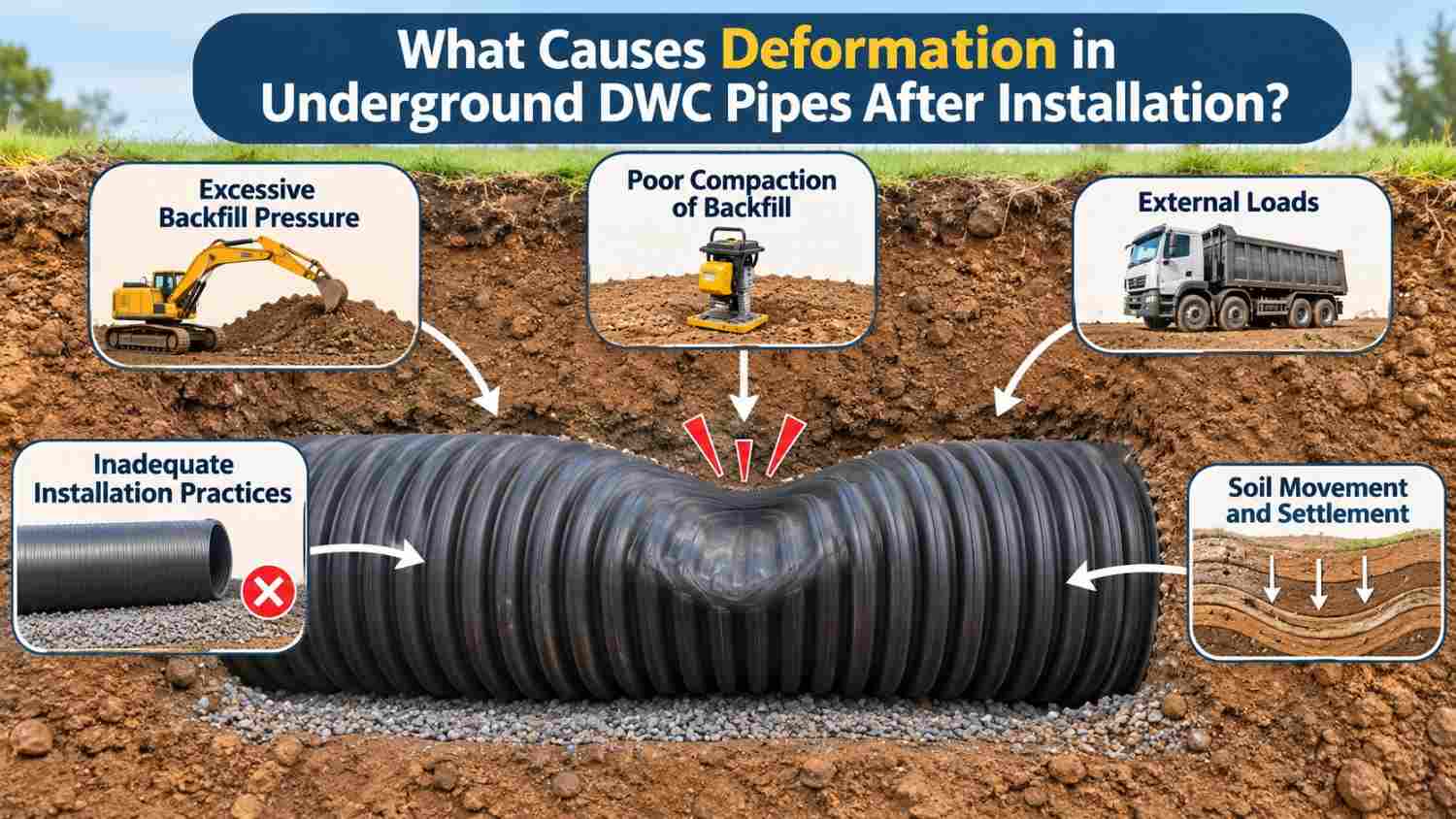
What Causes Deformation in Underground DWC Pipes After Installation
Underground pipe deformation can become a serious concern when a drainage or sewerage system starts showing signs of structural stress after installation. Underground DWC pipe deformation often relates to soil conditions, improper backfilling, external loading or installation mistakes. For anyone sourcing DWC pipes from a DWC pipes manufacturer in Delhi, understanding these risks before starting a project can help prevent costly repairs.
Best Tech Pipe understands the importance of selecting suitable piping products for underground applications. Let’s look at why deformation happens, how to recognise it and what contractors can do to reduce the risk.
What Is Pipe Deformation in Underground DWC Pipes?
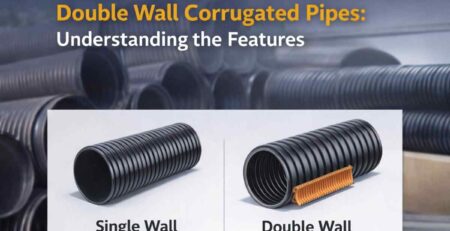
DWC pipes have a double-wall corrugated structure. The outer corrugated wall provides structural support, while the inner wall offers a smooth surface for fluid flow. Manufacturers commonly use polyethylene materials, including HDPE, for these pipes.
Unlike rigid concrete pipes, flexible thermoplastic pipes can undergo some movement under external loads. This behaviour is not automatically a defect. In fact, controlled pipe deflection helps the pipe interact with the surrounding soil and distribute loads.
Problems arise when deformation exceeds the limits specified by the project design or pipe manufacturer. Excessive vertical pipe deflection, ovality, pipe wall buckling or joint displacement can affect the pipe’s performance.
Best Tech Pipe offers underground double-wall corrugated piping solutions for drainage, sewerage and underground cable protection applications. Choosing the right product also requires understanding the conditions in which it will operate.
7 Major Causes of Underground Pipe Structural Failure
Several factors can contribute to Underground pipe structural failure. In many cases, the problem does not come from one source alone. Instead, soil conditions, installation quality and external loading work together.
1. Poor Soil Compaction Around the Pipe
Poor compaction is one of the important causes of deformation in buried flexible pipes.
After workers place a pipe inside a trench, they must carefully fill and compact the surrounding material. The side support, particularly around the lower sides or haunches, plays an important role in maintaining underground pipe stability.
When workers leave empty spaces around the pipe or compact the soil unevenly, the surrounding material cannot provide consistent support. This can lead to pipe damage due to poor soil compaction.
The Plastics Pipe Institute explains that flexible thermoplastic pipes rely on the stiffness of the surrounding soil to resist external loads. Therefore, good installation practices matter just as much as selecting an appropriate pipe.
2. Excessive External Loading and Heavy Vehicle Loads
Pipes installed beneath roads, parking areas and industrial sites may experience additional pressure from vehicles.
Heavy vehicle loads create surface pressure that travels through the soil towards the buried pipeline. If the installation depth, pipe stiffness and soil support do not suit the expected loading conditions, excessive deformation may occur.
Heavy traffic loads on buried drainage pipes deserve particular attention during project planning.
Best Tech Pipe supplies piping solutions for underground infrastructure applications, where selecting suitable pipe specifications for actual site conditions remains important.
3. Uneven Bedding and Ground Settlement
A pipe needs a stable foundation before workers begin backfilling.
If the trench bottom contains loose soil, stones or uneven surfaces, the pipe may receive inconsistent support. Ground settlement can also develop when the foundation soil compresses or changes over time.
These conditions create structural deformation and may contribute to pipe joint displacement.
The effects of uneven soil pressure on buried pipelines can become more noticeable when one section receives stronger support than another.
4. Incorrect Backfilling Practices
Underground pipe deformation after backfilling often develops when contractors use unsuitable filling materials or follow inconsistent compaction practices.
For example, placing heavy equipment too close to an inadequately covered pipe can introduce excessive construction loads. Dumping large quantities of soil at once may also disturb pipe alignment.
Proper backfilling requires suitable material, controlled placement and compaction in layers according to the project specifications.
5. Incorrect Pipe Selection for Site Conditions
Not every pipe suits every underground installation.
Engineers must consider pipe diameter, ring stiffness, material properties, burial depth, soil conditions and expected traffic loads before selecting a product.
HDPE pipe properties, including flexibility and resistance to deformation, influence how a pipe behaves under external pressure. However, the surrounding soil and installation conditions also determine its structural performance.
For this reason, buyers comparing Double Wall Corrugated Pipes in Delhi should consider technical suitability rather than choosing a product based on price alone.
6. Poor Joint Alignment and Connection Issues
Even when the pipe body performs correctly, poor joint installation can create problems.
Incorrect alignment, damaged sealing components or incomplete connections may allow infiltration or leakage. Uneven ground movement can also place additional stress on joints.
A properly connected pipeline helps maintain continuity throughout the underground drainage system.
7. Inadequate Design for Groundwater and Soil Conditions
Groundwater, weak soil and changing site conditions can influence buried pipe performance.
High groundwater levels may affect trench stability and create buoyancy forces, particularly when installation conditions do not provide sufficient restraint. A project engineer must consider these factors during structural design.
Best Tech Pipe encourages customers to consider the intended application and installation requirements when selecting underground piping solutions.
How to Prevent Pipe Deflection in Drainage Systems
Prevention starts before installation. Contractors, engineers and project managers should coordinate pipe selection, trench preparation and backfilling rather than treating these activities as separate jobs.
Important preventive measures include:
- Select the pipe stiffness and diameter according to project design requirements.
- Prepare a stable and uniform bedding surface.
- Use suitable embedment material around the pipe.
- Compact side support carefully and evenly.
- Maintain the specified installation depth and soil cover.
- Consider expected vehicle and construction loads.
- Inspect pipe alignment and joints before completing backfilling.
Regular checks after installation can also help identify unusual deformation.
How Does Best Tech Pipe Support Underground Piping Requirements?
Best Tech Pipe offers underground double-wall corrugated pipes for drainage, sewerage and underground cable protection applications. Its published product range also includes DWC sewerage pipes, perforated pipes, inspection chambers and fabricated bends.
The company provides different pipe sizes and diameters and mentions customisation options according to customer requirements.
Customers looking for a FRP Manhole Cover manufacturer in Delhi can also explore the company’s published FRP manhole cover product offering.
When selecting DWC Pipes, buyers should discuss the required diameter, application, site conditions and relevant technical specifications with the supplier. This helps ensure that the product matches the intended project requirements.
Conclusion: Choose the Right DWC Pipes for Reliable Underground Performance
Excessive deformation rarely has just one explanation. Poor soil compaction, uneven bedding, ground settlement, heavy traffic loads and unsuitable pipe selection can all affect underground pipe stability. Understanding DWC Pipes and their interaction with surrounding soil helps contractors make better installation decisions and reduce the risk of Underground pipe structural failure.
Best Tech Pipe offers underground piping solutions for different infrastructure requirements. If you are planning a drainage, sewerage or underground cable protection project, visit our website and Visit OurGoogle Business Profile to learn more about our products. Contact us to discuss your requirements and find a suitable piping solution for your application.





Leave a Reply