
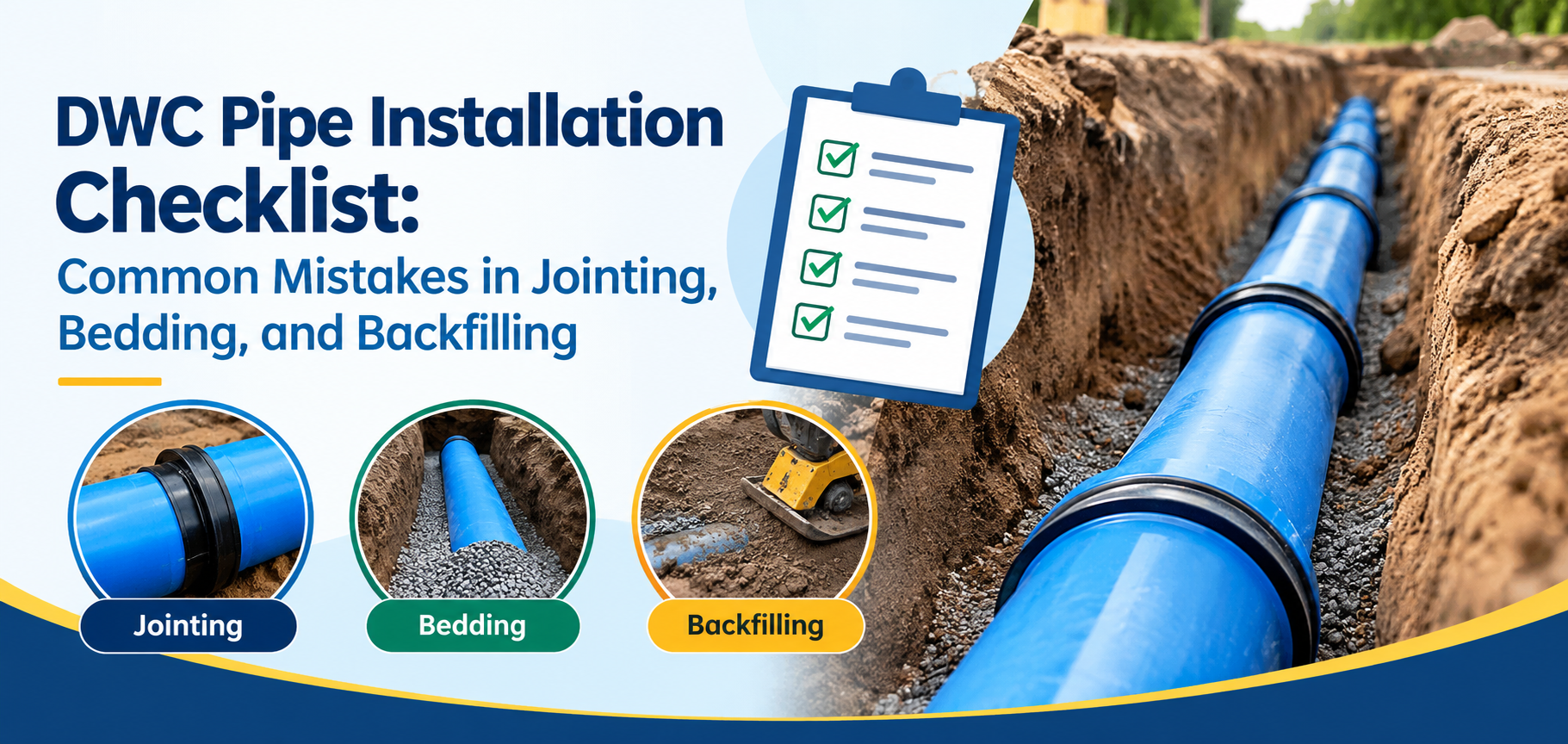
DWC Pipe Installation Checklist: Common Mistakes in Jointing, Bedding, and Backfilling
The importance of proper installation of the drainage pipes cannot be undermined. If there is poor jointing, inadequate bedding, and careless backfilling, it may result in leakage, deformation of pipes, soil settlement, and expensive repair work. The DWC pipe installation process ensures that such problems are averted.
At Best Tech Pipe, we realize the importance of choosing appropriate pipes and doing the installation process correctly in accordance with the needs of the projects. Irrespective of what kind of project we may be talking about, it could be either apartments, offices, or road drainage facilities; preparation and installation would matter a great deal.
This guide explains common installation mistakes, practical solutions, and essential checks to help you complete your drainage project efficiently and confidently. Before starting, consult a trusted DWC pipe supplier in Delhi to discuss suitable pipe specifications, sizes, and application requirements.
Are you looking forward to the next drainage project? Contact us right now to know about your requirements, appropriate product options, and quotation for your project.
Why Proper Installation Matters
A proper drainage network relies on correct installation, alignment, jointing, and soil support. High-quality pipes may underperform if they are poorly installed. A structured DWC pipe installation process ensures that there is minimum avoidable damage to the system.
For contractors and builders, the main benefits include:
- Better joint integrity and reduced leakage risks.
- Improved pipe alignment and structural support.
- Lower chances of settlement and deformation.
- Reduced maintenance requirements and repair costs.
Planning a drainage project? Review your site conditions and pipe requirements before purchasing materials to avoid unnecessary delays and installation expenses.
Common Installation Mistakes and Their Solutions
1. Poor Trench Preparation
At Best Tech Pipe, we understand that uneven trench bottoms, unsuitable soil conditions, and inadequate excavation can cause uneven pipe support. Proper underground pipe trench preparation is essential before laying any drainage line to ensure stability, reliable performance, and long-lasting drainage infrastructure.
How to avoid it:
- Remove sharp stones, debris, and unsuitable material.
- Maintain the specified trench width and depth.
- Provide a stable, even foundation according to project specifications.
- Address groundwater or unstable soil conditions before installation.
2. Incorrect Bedding Material
Bedding distributes support around the pipe. Hard objects, inconsistent bedding thickness, or unsupported sections can create concentrated loads.
During pipe installation, use approved bedding material and prepare an even supporting layer. Follow the manufacturer’s recommendations and project design for bedding thickness and compaction.
3. Improper Jointing
Incorrect alignment, contaminated sockets, damaged seals, or incomplete connections can compromise the pipeline. The appropriate DWC pipe jointing method depends on the pipe design and manufacturer’s instructions.
To reduce jointing problems:
- Inspect pipe ends and seals before assembly.
- Remove dirt and debris from joining surfaces.
- Align pipes correctly without forcing the connection.
- Check that each joint is fully engaged as specified.
- Conduct the required inspection or leakage testing.
4. Careless Backfilling and Compaction
Backfilling without adequate side support can cause displacement, deformation, or settlement. These are common drainage pipe installation mistakes that may be difficult to identify after the trench is closed.
Use suitable backfill material, place it evenly around the pipe, and compact it in controlled layers according to project requirements. Avoid heavy equipment directly above the pipeline until the required protective cover is achieved.
Installation Checklist at a Glance
|
Installation stage |
Essential check |
| Site preparation | Stable trench and correct alignment |
| Bedding | Even support with approved material |
| Jointing | Clean surfaces and secure connections |
| Backfilling | Suitable material and controlled compaction |
| Final inspection | Required tests and documented checks |
This checklist supports a consistent corrugated pipe installation process. Actual dimensions, cover depth, bedding requirements, and compaction levels must follow approved drawings, applicable standards, and manufacturer guidance.
Also Read: Why Are Inspection Chamber Needed in Underground Drainage Systems?
Choosing Suitable Pipes for Your Project
Prior to carrying out any underground drainage work, it is necessary to make sure that pipe size, bedding, jointing system, and backfilling process conform to the technical requirements of the project. Choosing appropriate underground double wall corrugated pipes in Delhi may also assist project teams in acquiring products according to their requirements.
For projects requiring dependable Underground drainage pipes, compare technical specifications rather than choosing products on price alone. Suitable products should meet the project’s design requirements and applicable standards.
Best Tech Pipe offers pipe-related solutions for construction and infrastructure requirements. Discuss your application, quantity, delivery location, and technical specifications with the supplier before finalizing your order.
Looking for pipes for your next project? Get quotations on different types of products available in the market by asking your chosen supplier for quotations.
Final Checks Before Closing the Trench
Before completing the work, verify that:
- The pipeline follows the approved alignment and gradient.
- Joints are correctly assembled and inspected.
- Bedding and side support meet project requirements.
- Backfilling and compaction follow the approved procedure.
- Required testing and inspection records are complete.
A well-managed DWC pipe installation process can prevent any unnecessary problems and ensure reliable performance of the drainage system. Best Tech Pipe recommends that contractors and projects prioritize proper material selection, proper installation, and proper workmanship based on specifications.
Frequently Asked Questions
What causes DWC pipe installation problems?
Common causes include uneven bedding, poor joint alignment, unsuitable backfill, excessive compaction loads, and inadequate trench preparation.
How should DWC pipes be backfilled?
Use approved material, provide even side support, and compact it in controlled layers according to the manufacturer’s instructions and project specifications.
How can I select suitable pipes for an underground drainage project?
Evaluate pipe diameter, stiffness, installation depth, soil conditions, loading, and applicable technical requirements before purchasing.
Contact Best Tech Pipe to discuss your project requirements, request product details, and obtain a quotation for your drainage pipe requirements.

Leave a Reply