
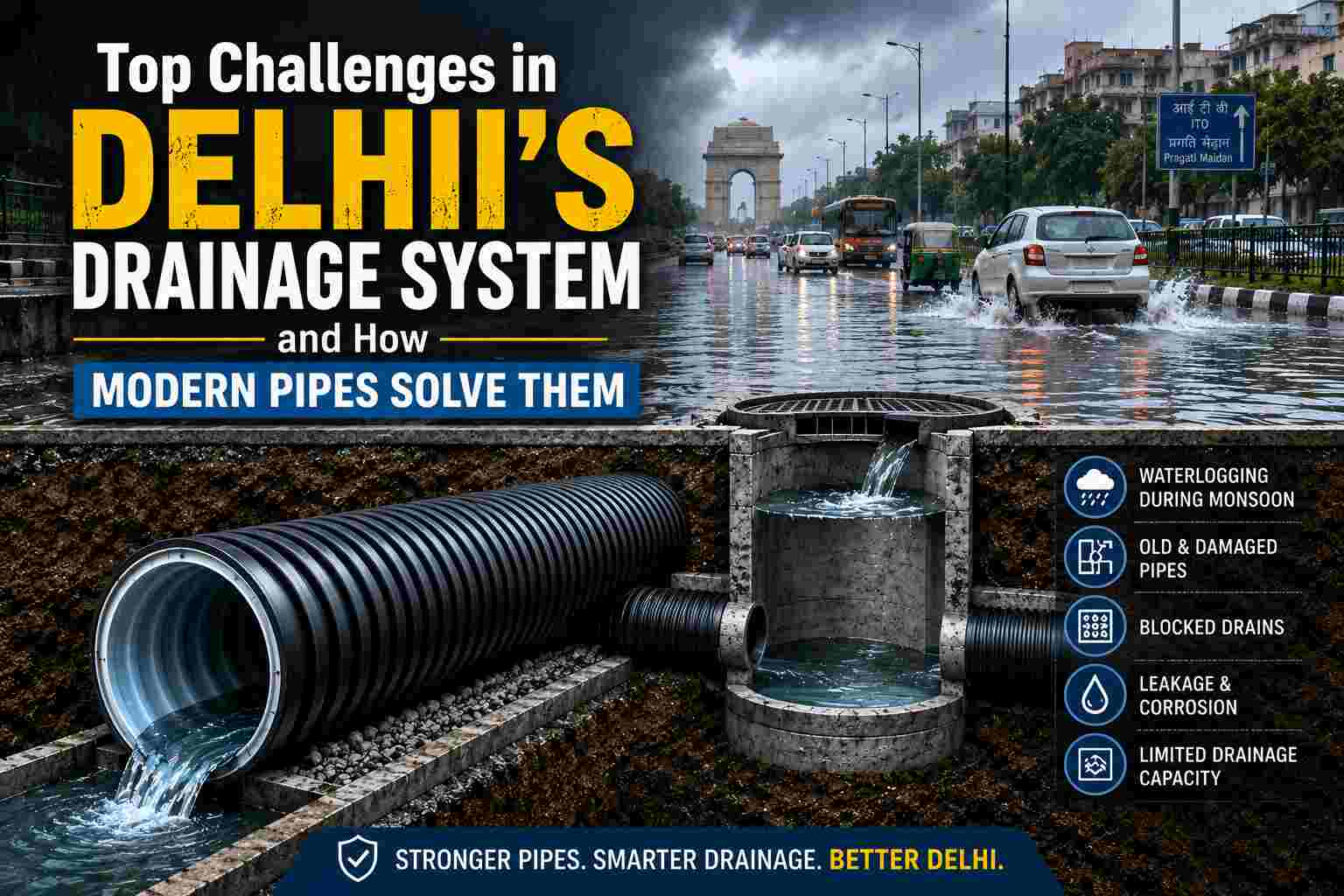
Delhi Drainage System Challenges Solutions: How Modern Pipes Help
Delhi’s drainage system is something most people only think about when it stops working. One heavy spell of rain and suddenly water is standing on roads, drains are overflowing, and traffic slows down in several areas.
However, heavy rainfall is not the only issue. The city is growing fast, more roads and buildings and car parking places have been constructed, therefore, the way rainwater moves has changed. Now there is less space for rainwater to seep in naturally and thus, more water needs to go through the drainage system.
Some drainage networks are also old and have to handle far more water than before. This is where Delhi drainage system challenges solutions need to be looked at from a practical, long-term point of view.
Why Is The Drainage System Of Delhi In Such High Demand?
The problems could result from aging pipelines, clogged drains or outlets that lack capacity.
And then comes the monsoon season. If it rains excessively for a period, even the most efficient drainage system would be put to the test.
In case of any new installation, the selection of the right products and sizes will make things easier in the future. Contractors could opt for the assistance of a professional DWC pipe supplier in Delhi.
5 Problems That Put Pressure on Delhi’s Drainage Network
For contractors and project planners, Delhi drainage system challenges solutions are closely connected to pipe selection and overall system design.
1. Waterlogging After Heavy Rain
Waterlogging is the most common case of drainage issue in Delhi. When rainwater does not manage to get out of the place fast enough, roads and areas become full.
Sometimes the drainage system may receive too much water to manage. Poor maintenance and improper planning make the situation worse.
A properly designed stormwater system needs to give rainwater a clear route away.
2. Old Underground Pipelines
A buried pipe can remain there for years while dealing with soil pressure, moisture and traffic loads.
Eventually, a joint may start leaking, a pipe may crack, or a section may become damaged. The difficult part is finding these problems because underground damage is not always visible.
Replacing an old or badly damaged section with a modern pipe can sometimes make more sense than continuing with repeated repairs.
3. Blocked Drainage Lines
Soil, leaves, plastic waste and construction debris can gradually make their way into drainage lines. Once enough material collects inside the pipe, water has less room to move.
During heavy rain, that restricted flow can quickly become a bigger issue. Regular cleaning is important, but pipe design also matters. A smoother internal surface can help water move through the line.
4. Leakage and Corrosion
Underground drainage pipes spend most of their lives in damp conditions. Depending on the application, they may also face wastewater.
Some materials can deteriorate over time. Corrosion can slowly reduce the strength of a pipe before a leak or failure becomes visible.
Modern plastic-based pipes do not rust, making them worth considering for many underground drainage applications and supporting Delhi drainage system challenges solutions.
5. Older Systems Facing New Demands
Delhi today is very different from the city that existed when many older drainage systems were planned. There is more construction and demand on underground infrastructure.
A pipeline that was sufficient years ago may not be enough today. New projects need to consider expected water flow, pipe size, installation depth, soil conditions and external loads.
How Can Modern Pipes Help?
One part of Delhi drainage system challenges solutions is choosing materials that are better suited to today’s underground infrastructure requirements.
DWC, or Double Wall Corrugated, pipes are used in many underground applications. The wavy surface offers strength, whereas the smooth inner surface makes it easy for water to pass through.
DWC pipes are comparatively lightweight and hence easy to transport. It also adds to their value that they are rust resistant.
Depending on the project, DWC pipes can offer:
- Good structural strength
- Resistance to rust and corrosion
- Smooth internal flow
- Easier handling
- Long-term underground use
Pipe size, depth, soil conditions, expected loads and water flow still need to be considered for each project.
Why Are DWC Pipes Used for Drainage?
The two-wall design gives DWC pipes a useful combination of strength and flow. The corrugated outer wall helps deal with soil pressure, while the smoother inner wall provides a clear path for water.
For suitable projects, they can be used in stormwater drainage, sewage and other underground applications.
Their resistance to corrosion is another reason they can be useful underground. Still, proper trench preparation, alignment and jointing matter.
If access points need lightweight and corrosion-proof covers, one may consider an FRP Manhole Cover Manufacturer in Delhi.
What About Inspection and Maintenance?
Manholes, inspection pits, outlets and joints are also essential components of drainage systems.
Once the system is installed, it cannot simply be forgotten. A small blockage found during inspection is much easier to deal with than a major blockage after flooding.
Inspection chambers make it easier to reach underground drainage lines. Selecting reliable Inspection Chamber Manufacturers in Delhi can also be an important part of drainage planning.
For more information about Best Tech Pipe and its local presence, you can visit the Google Business Profile.
A More Practical Way Forward
Delhi’s drainage problems are not going to disappear because of one new pipe. Better planning, suitable materials, enough drainage capacity, proper installation and regular maintenance all matter.
Modern DWC pipes can be one part of that approach because they offer strength, corrosion resistance and practical handling.
Ultimately, Delhi drainage system challenges solutions should be about building drainage systems that are prepared for real conditions—not just systems that look good on paper.
Best Tech Pipe manufactures DWC pipes for underground infrastructure projects across Delhi-NCR and supplies products according to different project requirements.For projects looking at Delhi drainage system challenges solutions would benefit greatly from having the proper pipes installed effectively.
Looking for DWC Pipes for Your Project?
The right pipe should be selected according to the project requirements, not simply on price. This is another important part of Delhi drainage system challenges solutions.
Best Tech Pipe supplies DWC pipes for drainage and other underground infrastructure applications across Delhi-NCR.
Best Tech Pipe can help you discuss suitable options. In case you have any need for an underground drainage, stormwater, sewage, or underground construction project, do not hesitate to contact us.
Frequently Asked Questions
What are the main drainage problems in Delhi?
Waterlogging, blocked drains, old pipelines, leakage, corrosion and limited drainage capacity are common problems. Heavy monsoon rainfall can make them more noticeable.
How does waterlogging occur in Delhi during monsoons?
The excessive rain may result in too much water entering the system, which the system can not deal with. The drains can be blocked, resulting in water on the roads.
Are DWC pipes suitable for underground drainage?
Yes. DWC pipes can be used for suitable stormwater, sewage and other underground drainage applications. Their outer structure provides strength, while the smoother inner wall supports water flow.
What should I consider when choosing a drainage pipe?
Start with the application and site conditions. Pipe size, expected flow, depth, soil conditions and external loads are important.
Can modern pipes reduce drainage maintenance?
They can reduce corrosion-related problems, but regular inspection, cleaning and proper installation are still necessary.

Leave a Reply